


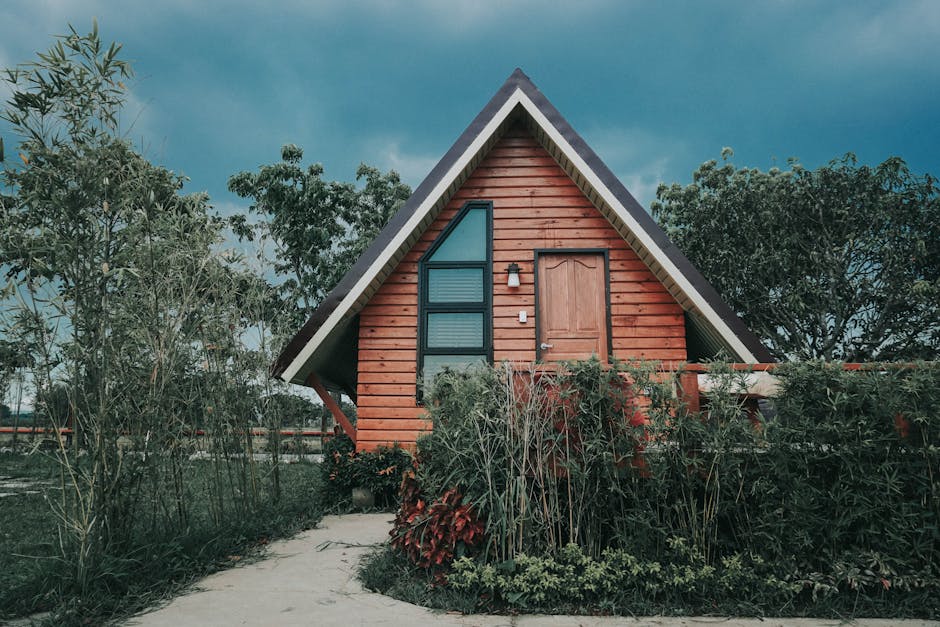
Why More People Are Choosing to Buy Tiny House Living
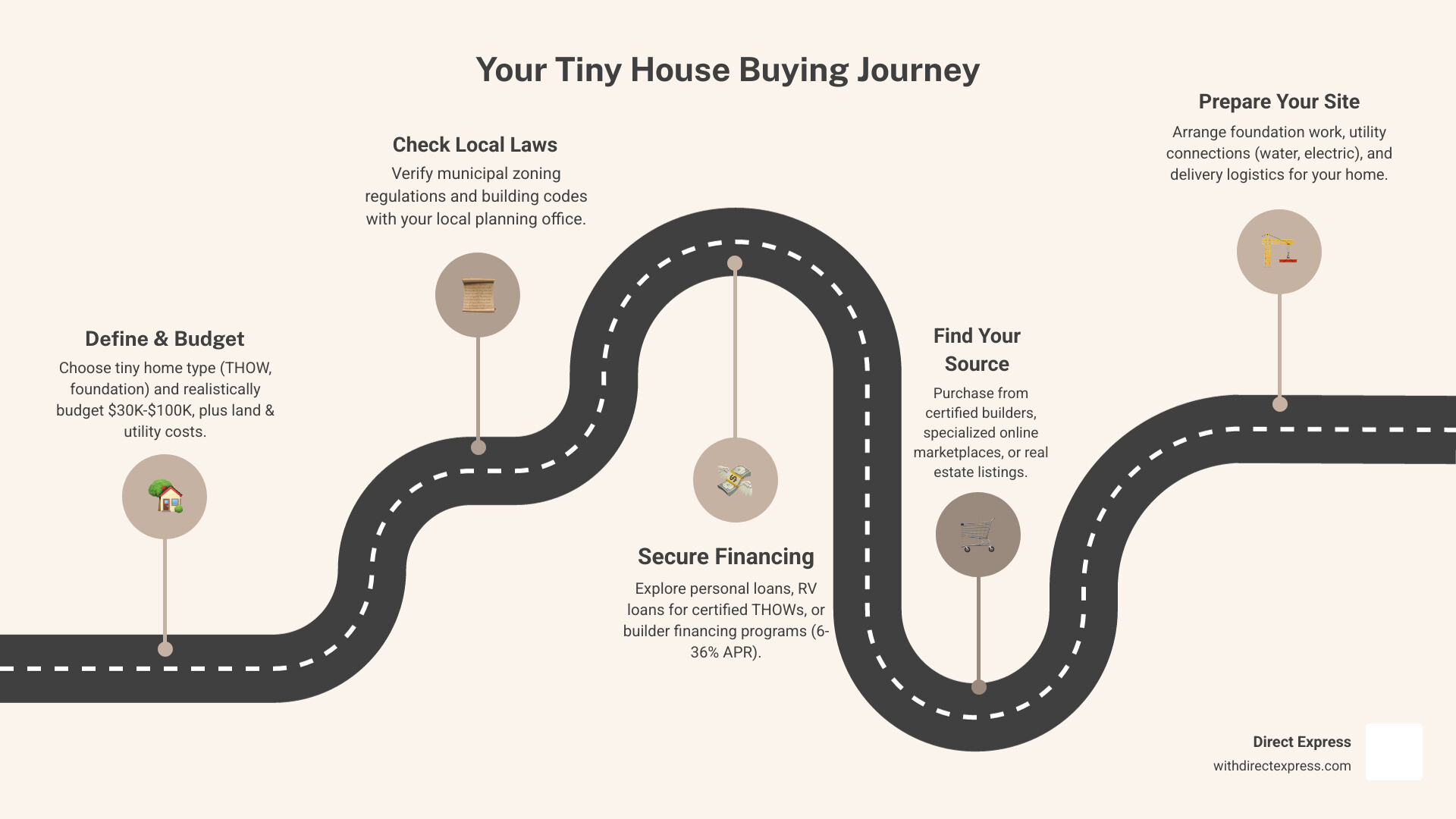
Buy tiny house options and you’re stepping into a growing movement driven by affordability, simplicity, and environmental consciousness. Here’s what you need to know:
Quick Guide to Buying a Tiny House:
- Define Your Type – Choose between tiny homes on wheels (THOWs), permanent foundation homes, park models, or shipping container conversions
- Budget Realistically – Expect $30,000 to $100,000 for the home, plus land, permits, utility hookups, and transport costs
- Check Local Laws – Verify zoning regulations and building codes with your municipal planning office before purchasing
- Secure Financing – Explore personal loans (6-36% APR), RV loans for certified THOWs, or builder financing programs
- Find Your Source – Buy from certified builders, specialized marketplaces, or real estate listings
- Prepare Your Site – Arrange foundation work, utility connections, and delivery logistics
The tiny house movement addresses real concerns. 68% of tiny homeowners have no mortgage, compared to just 29% of traditional U.S. homeowners. With the International Code Council defining a tiny house as a dwelling under 400 square feet, these compact homes offer an escape from rising housing costs while reducing your environmental footprint and embracing minimalist living.
The appeal is clear, but the process isn’t simple. Zoning laws vary wildly between municipalities. Financing options differ from traditional mortgages. And ongoing costs like insurance, maintenance, and lot rent need careful consideration.
As Joseph Cavaleri, CEO of Direct Express Realty with over 20 years in real estate, property management, and construction, I’ve guided countless clients through complex property decisions, including those looking to buy tiny house options as primary residences, rental investments, or accessory dwelling units. This guide walks you through every step of the journey, from understanding your options to closing the deal.
Quick look at buy tiny house:
- buying a home
- buying a home checklist
- first home buyer checklist
Understanding the Tiny House Landscape
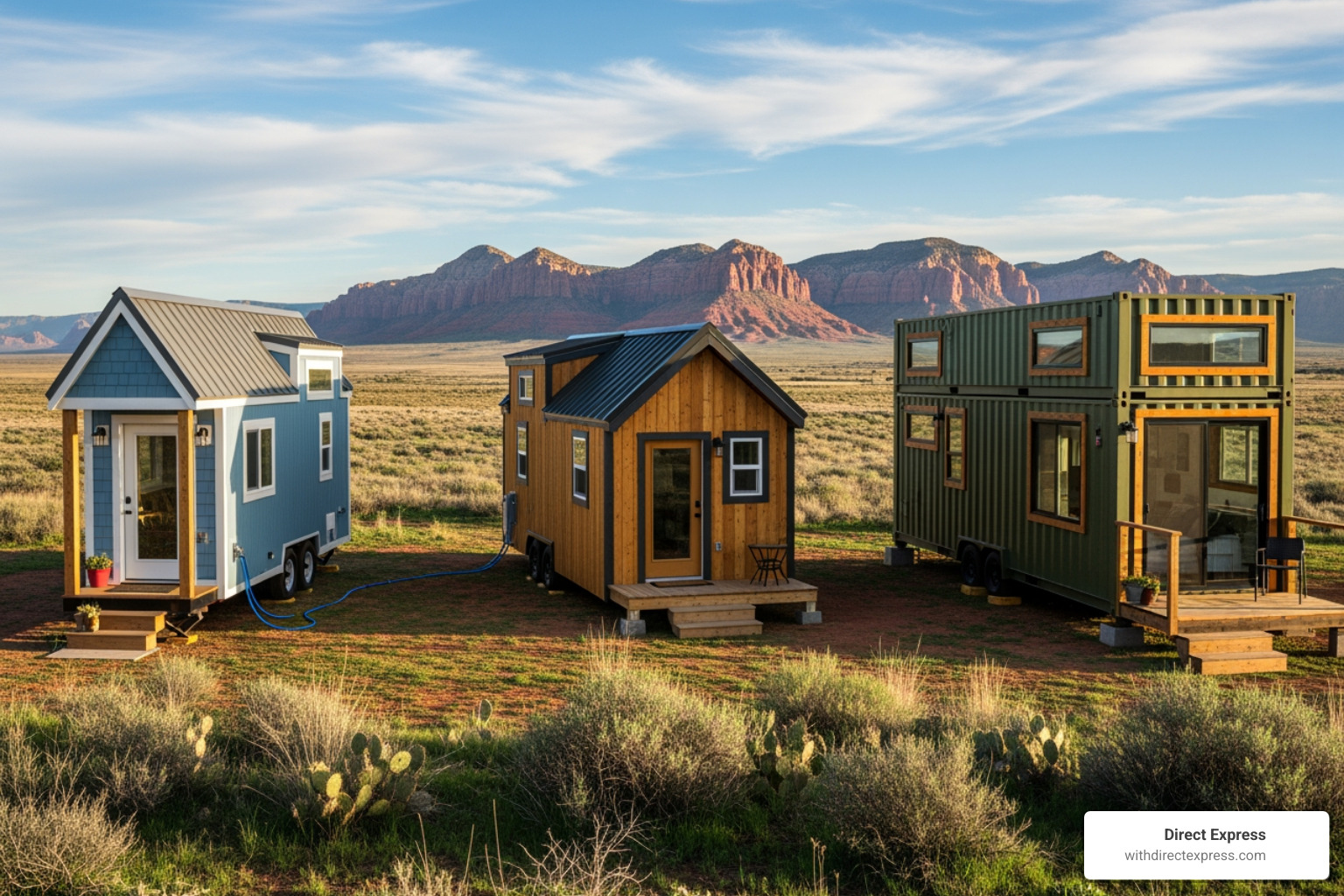
The world of tiny houses is diverse, offering various structures designed to fit different lifestyles and needs. From mobile units to fixed foundations, understanding these types is the first step in your journey to buy tiny house. While the tiny house movement is global, the principles of these different types remain consistent, even as local regulations in places like St. Petersburg, Tampa Bay, and Palm Harbor dictate their placement and use.
Tiny Homes on Wheels (THOWs) vs. Permanent Foundations
One of the most fundamental decisions is whether you want a mobile unit or one anchored to a permanent foundation. This choice significantly impacts everything from legality to financing.
Tiny Homes on Wheels (THOWs): Built on a trailer chassis, THOWs offer mobility but face legal challenges. Often classified as RVs, their full-time placement is typically restricted to designated RV parks or tiny home communities. In Florida, rules vary widely by municipality, from rural Parrish to urban Tampa or St. Petersburg. While you may save on property taxes (levied on the land, not the structure), securing a legal parking spot is a primary hurdle.
Tiny Homes on Permanent Foundations: These homes offer stability and a clearer legal path. Built on-site or placed on a foundation, they can often be permitted as Accessory Dwelling Units (ADUs)—secondary housing units on a residential lot. In Florida, ADUs are gaining traction as a solution to housing shortages, making them ideal for family use or as rental units to generate income. This option adds permanent value to your property.
Whether you prioritize mobility or stability, understanding the local zoning and building codes in your chosen Florida location is paramount. We at Direct Express can help you steer these complex regulations to ensure your tiny home dream becomes a legal reality.
For those interested in the investment potential of adding an ADU to their property, you can find more info about property investment on our site.
Prefab, Kits, and Custom Builds
Beyond the foundation type, how your tiny house is constructed also offers a spectrum of choices, each with its own cost, customization, and timeline implications.
Prefabricated Homes: Factory-built and transported to your site, prefabs offer speed, quality control, and predictable costs, though with less customization than a custom build. The efficiency of this method allows for large-scale production of high-quality homes.
Tiny House Kits: For the DIY-inclined, kits provide the materials and instructions for self-assembly. This route is often cheaper and allows for customization but requires significant labor and construction skills.
Custom-Built Homes: This option offers maximum personalization, as you work with a builder to design every detail. It provides ultimate flexibility but is typically the most expensive and time-consuming choice.
The choice among prefab, kits, or custom builds depends on your budget, timeline, and desired level of involvement. No matter your choice, our team is equipped to assist with new home construction and guide you through the process, ensuring your tiny home meets your specifications and local Florida building codes.
The Financials: Costs, Financing, and Ongoing Expenses
One of the primary drivers for people looking to buy tiny house is the promise of affordability. While the initial purchase price of $30,000 to $100,000 is lower than a traditional home, it’s crucial to understand the full financial picture.
Beyond the Sticker Price:
The purchase price is just the beginning. You must budget for these additional costs:
- Land: A major expense, especially in desirable Florida areas like Tampa Bay or St. Petersburg.
- Site Prep & Utilities: Costs for grading, foundation, and connecting to water, sewer, and electricity can be substantial.
- Permits & Fees: Municipal permits for placement and construction are required.
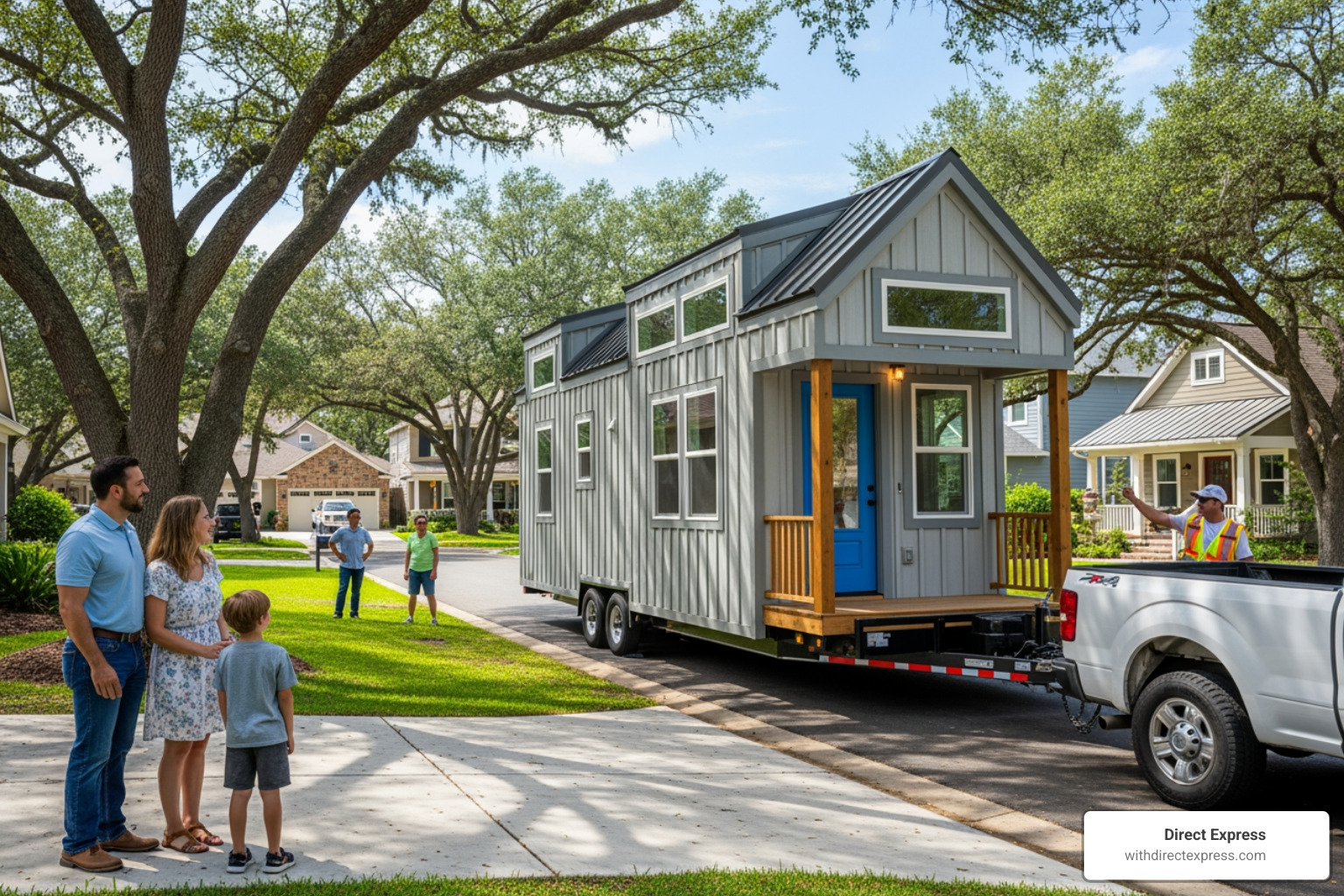
- Transportation: Moving the home to your site can cost thousands, often priced per mile.
Ongoing Costs:
Don’t forget recurring expenses like maintenance, utilities (though lower), insurance, and either lot rent (for communities) or property taxes (for foundation homes).
How to Finance Your Tiny House Purchase
Securing a traditional mortgage is difficult because tiny homes often don’t meet lenders’ minimum square footage or permanent foundation requirements. This makes alternative financing essential.
Financing Options:
- Cash Payment: The most straightforward approach, allowing you to own the home outright.
- Personal Loans: Unsecured loans with APRs typically from 6% to 36%, based on your credit.
- RV Loans: A good option for certified THOWs, often with better terms than personal loans.
- Home Equity Loans/Lines of Credit (HELOC): Leverage the equity in an existing property to fund your tiny home purchase.
- Builder Financing: Many builders partner with lenders who specialize in tiny homes, sometimes offering competitive rates and terms.
Navigating these financing options requires expertise. Our mortgage specialists at Direct Express can help you explore what’s available and suitable for your situation. Get help with your mortgage and start your mortgage pre-approval with us today.
The Investment Potential of a Tiny Home
Beyond personal living, a tiny home can be a shrewd real estate investment, especially in a dynamic market like Florida.
Generating Rental Income:
A tiny home on your property can be an excellent source of rental income. A charming “casita” in your backyard in Largo or Lutz can be rented out on platforms like Airbnb, helping offset property costs and providing passive income.
Accessory Dwelling Unit (ADU) Benefits:
As mentioned, tiny homes on foundations can function as ADUs, adding significant value and utility to your property. Whether for multi-generational living or as a dedicated rental unit, an ADU improves your property’s market appeal. In areas struggling with housing shortages, ADUs are seen as a vital part of the solution, and a well-designed, legal ADU can boost your property’s overall worth.
We understand real estate investment and property management in Florida. Let us help you assess the potential of a tiny home as part of your portfolio. For more insights, check out our resources on property investment help and our Beginners Guide to Property Management.
Navigating the Legal Maze: Zoning, Codes, and Certifications
One of the biggest problems when you decide to buy tiny house is the intricate web of local regulations. Unlike traditional homes, tiny houses often fall into a regulatory grey area, making due diligence on zoning, building codes, and certifications absolutely essential. This is particularly true in Florida, where regulations can vary significantly from one county to another, and even between neighboring cities like Tampa and St. Petersburg.
Florida’s Local Regulations: The Biggest Hurdle
Before you buy, you must contact your local planning and building department to understand the specific rules for your area. Key questions to ask officials include:
- What are the minimum square footage requirements for a dwelling?
- What are the rules for Accessory Dwelling Units (ADUs)?
- Are THOWs/RVs allowed for full-time residency, and where?
- What are the requirements for utility connections?
For tiny homes on foundations, compliance with the Florida Building Code is typically required. For THOWs, their classification as RVs often restricts them to designated parks. However, many Florida communities are embracing ADUs, making foundation-based tiny homes a viable path to legal placement on a residential lot.
The Importance of CSA and NOAH Certifications
When purchasing a tiny house, certifications like CSA (Canadian Standards Association) or NOAH (National Organization of Alternative Housing) are incredibly important. NOAH certification, specifically, ensures that a tiny home meets stringent standards.
Why Certification Matters:
- Safety and Quality: Certification provides third-party assurance that the home’s structure, electrical, and plumbing systems meet safety standards.
- Easier Permitting and Financing: A certified home is more likely to be recognized by local authorities and financed by lenders.
- Insurance and Resale Value: Insurers are more willing to cover certified homes, and the certification adds significant resale value.
Always inquire about a builder’s certifications. It’s a key indicator of their commitment to quality and compliance.
Finding a Tiny-House-Friendly Municipality
The success of your tiny house journey hinges on finding a location in Florida that is welcoming to this lifestyle. Your research should start with the zoning ordinances of the specific Florida counties and cities you’re considering, such as Palm Harbor or Wesley Chapel. When speaking to officials, be specific about your structure (e.g., “Park Model Home” for a unit built to RV standards) to get the clearest guidance.
Understanding Florida’s real estate law is crucial in this process. We can help you steer these local nuances and ensure your tiny home plans align with the legal landscape. Learn more about Florida real estate law.
Your Step-by-Step Guide to buy tiny house
Starting on the journey to buy tiny house can be exciting and rewarding. Here’s a structured approach to guide you through the process, from initial research to moving into your new compact home.
| Feature | New Tiny Home | Used Tiny Home |
|---|---|---|
| Cost | Higher initial cost (typically $30,000-$100,000+) | Lower initial cost (can be significantly less) |
| Customization | Full customization options | Limited to existing design, some minor modifications |
| Warranty | Manufacturer’s warranty, often comprehensive | Limited or no warranty, “as-is” purchase |
| Condition | Brand new, no wear and tear | Varies greatly, may require repairs or upgrades |
| Certifications | More likely to be certified (NOAH, CSA) | Less likely to be certified or certification expired |
| Financing | Easier to finance with builder/RV loans | Potentially harder to finance, more cash-based |
| Availability | Build time required (weeks to months) | Immediate availability, quick move-in possible |
| Hidden Issues | Minimal | Potential for unforeseen issues (structural, leaks) |
Step 1: Finding Your Tiny House
Your search for the perfect tiny house can lead you to several sources:
- Reputable Builders: The safest route. Look for builders with strong reviews, transparent pricing, and quality certifications (like NOAH).
- Online Marketplaces: Specialized websites list new and used tiny homes from builders and private sellers.
- Real Estate Listings: Tiny homes on permanent foundations, especially those permitted as ADUs, may appear on standard real estate listings. Our agents can help you find these properties in the Tampa Bay area.
Red Flags: Beware of unlicensed builders, a lack of certification, unclear contracts, and deals that seem too good to be true. Always inspect a used home thoroughly. Our home buying checklist can help. For more ideas on where to search, check out Solved! Where to Buy a Tiny House .
Step 2: Design and Construction
After choosing a builder, the process typically involves:
- Design Finalization: You’ll work with the builder to finalize the layout, materials, and finishes. This can take several weeks.
- Contract and Build: A detailed contract will outline the timeline, payment schedule, and scope of work. The build itself often takes 8-10 weeks. Many builders offer online portals to track progress.
- Final Inspection: Before delivery, you’ll conduct a final walkthrough to ensure everything meets the agreed-upon specifications. A third-party inspection is also recommended for quality assurance. Our team can provide guidance on property construction.
Step 3: Site Prep and Delivery
While your home is being built, you must prepare your land.
- Site Preparation: This involves grading the land for drainage and either pouring a foundation (for permanent homes) or creating a level pad (for THOWs).
- Utility Hookups: You must arrange for connections to water, sewer/septic, and electricity. Using licensed contractors is essential for code compliance. Our plumbing services can handle water and sewer connections.
- Transportation: Coordinate with your builder or a specialized transport company for delivery. This requires permits and experienced drivers. On-site setup can take a couple of days and may have additional costs.
Frequently Asked Questions about Buying a Tiny House
How much does it really cost to buy a tiny house in Florida?
A tiny house typically costs between $30,000 and $100,000. However, this is just for the structure itself. It excludes crucial additional costs such as land purchase or lease, site preparation (grading, foundation), permits, utility connections (water, sewer, electricity), and transportation fees. These extra expenses can easily add tens of thousands of dollars to your total investment, so always budget comprehensively.
Is it legal to live in a tiny house full-time in Florida?
The legality of full-time tiny house living in Florida depends entirely on the specific municipal zoning and building codes of your chosen location. Some areas, particularly those open to Accessory Dwelling Units (ADUs), are becoming more accommodating for tiny homes on permanent foundations. Tiny homes on wheels (THOWs), often classified as RVs, typically face stricter regulations and may only be permitted in designated RV parks or tiny home communities for full-time residency. It is absolutely essential to contact the local planning and zoning department in your Florida county or city (e.g., St. Petersburg, Tampa, Palm Harbor) before making any purchase or placement decisions.
Can I get a traditional mortgage to buy tiny house units?
It is generally challenging to secure a traditional mortgage for tiny house units. Most conventional mortgage lenders require homes to be on a permanent foundation and meet minimum square footage requirements, which many tiny homes do not. Buyers typically resort to alternative financing methods such as personal loans (with APRs ranging from 6% to 36%), RV loans (for certified Tiny Homes on Wheels), home equity loans or lines of credit (if you own another property), or direct financing options offered by some tiny home builders.
Conclusion
The journey to buy tiny house is an exciting path towards financial freedom, simplified living, and a reduced environmental footprint. As we’ve explored, it offers unique advantages but also requires careful consideration of types, costs, financing, and, crucially, local regulations.
From understanding the nuances between tiny homes on wheels and those on permanent foundations to navigating the complexities of financing and local zoning in Florida, due diligence is your most valuable tool. By researching reputable builders, understanding the importance of certifications, and preparing your site carefully, you can transform your tiny house dream into a tangible reality.
At Direct Express, we understand the intricacies of the real estate market, from traditional homes to emerging trends like tiny houses. Our integrated services, covering buying, selling, investing, mortgages, property management, and construction, mean we’re uniquely positioned to guide you through every step of this journey. We’re here to help you make informed decisions, connect you with the right resources, and ensure your path to tiny home ownership is as smooth as possible.
Ready to take the next step towards your tiny home? Start your home buying journey with us today.