



Why Choose Real Estate for Your Investment Portfolio?
Property investment help begins with a clear understanding of why real estate stands out as a premier wealth-building strategy. For generations, property has been a cornerstone of financial stability and growth, offering unique advantages that other investment vehicles simply cannot replicate. Whether you’re aiming for financial independence, a comfortable retirement, or a robust legacy for your family, real estate provides a tangible path forward.
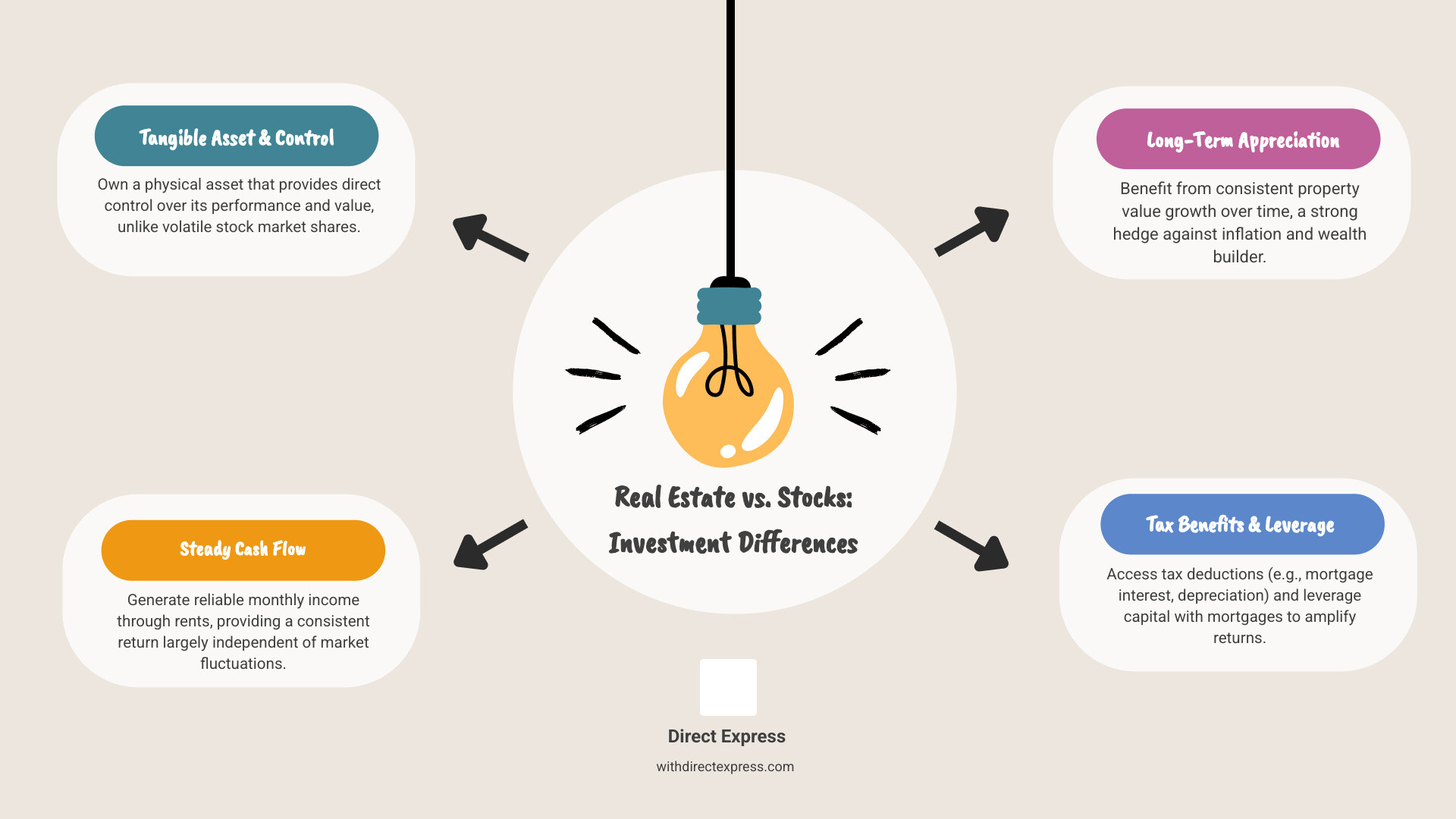
Unlike the abstract nature of stocks or bonds, real estate investing means you own a physical asset—a piece of land with a structure on it that serves a fundamental human need: shelter. This intrinsic value provides a layer of security. As one research source noted, “Property seems like a safe bet compared to the stock market because, even if it doesn’t work out, you still own a physical asset.”
The Power of Real Estate by the Numbers
The numbers tell a compelling story, especially in high-growth regions. In Florida’s thriving Tampa Bay area, for example, property values have surged impressively over the past several years. This appreciation isn’t just a number on a screen; it represents a substantial increase in real-world equity for investors. Coupled with strong population growth and high demand for housing, the rental market remains robust. With vacancy rates in many key Florida markets sitting at historic lows, the demand for rental properties creates a consistent and reliable income stream for landlords.
More Ways Real Estate Builds Wealth
Beyond appreciation and cash flow, a few additional dynamics make real estate uniquely powerful:
- Leverage: With a down payment and financing, you can control a larger asset and amplify your returns as rents rise and the loan balance is paid down.
- Inflation hedge: Rents and replacement costs tend to move with inflation over time. A fixed-rate mortgage means your principal and interest payment is locked while income can grow.
- Forced equity: Targeted renovations—like adding a bedroom, refreshing kitchens and baths, or improving energy efficiency—can increase both rent and value.
- Tax optimization: In addition to standard deductions and depreciation, strategies like cost segregation (when appropriate) can accelerate depreciation deductions. Always coordinate with a tax professional.
Why Florida—and Tampa Bay—Make Sense for Investors
Local fundamentals drive performance. The St. Petersburg, Tampa, Palm Harbor, Lutz, Wesley Chapel, Largo, and Parrish markets benefit from:
- Strong in-migration and household formation
- Diverse employment centers across healthcare, finance, defense, and tech
- Lifestyle amenities, universities, and waterfront recreation that attract long-term renters
- Active redevelopment and infrastructure improvements
These trends support rent demand and underpin long-term value creation, while still offering a wide range of price points and property types for different investor profiles.
Control You Can Actually Use
Real estate gives you a level of control that is best in other investments. You can make strategic improvements to increase the property’s value, carefully screen and select your tenants, and set rental rates based on market conditions. You are the CEO of your investment, making decisions that directly impact your bottom line. With an integrated partner, you can go from “I want to invest” to “keys in hand” more efficiently by aligning search, lending, renovations, and management under one roof.
I’m Joseph Cavaleri, and over two decades of leading Direct Express Realty, I’ve helped countless clients steer property investment help opportunities, from their first purchase to building substantial portfolios. My experience spanning real estate brokerage, property management, and construction gives me unique insight into what makes investments truly successful in markets like St. Petersburg, Tampa, and Wesley Chapel.
Common Pitfalls New Investors Can Avoid
- Chasing appreciation without stress-testing cash flow at conservative rent and higher interest rates
- Underestimating maintenance, turnover, and capital reserves needed for roofs, HVAC, and major systems
- Over-improving properties beyond neighborhood rent ceilings
- Buying in flood-prone or insurance-challenged areas without fully evaluating risk and costs
- Self-managing without systems for tenant screening, leasing, compliance, and accounting
With the right plan, team, and property selection, your first deal can set the standard—and the systems—for every deal that follows.
Crafting Your Investment Strategy: Direct Ownership and Smart Approaches
When it comes to property investment help, the most empowering path for many is direct ownership. This approach gives you maximum control and the full benefit of the returns your asset generates. The two most common strategies within direct ownership are purchasing long-term rental properties and short-term house flipping. Each caters to different financial goals, risk tolerances, and time commitments.
Direct Investing: Rental Properties vs. House Flipping
Understanding the fundamental differences between these two strategies is the first step in aligning your investment choice with your personal and financial objectives.
| Feature | Rental Properties | House Flipping |
|---|---|---|
| Primary Goal | Long-term passive income & appreciation | Short-term, lump-sum profit |
| Income Stream | Consistent monthly cash flow | One-time profit upon sale |
| Time Commitment | Ongoing management (tenant relations, maintenance) | Intense, short-term (finding, renovating, selling) |
| Risk Level | Lower to moderate (market fluctuations, vacancies) | High (budget overruns, market shifts, holding costs) |
| Financing | Standard investment property loans (20-25% down) | Short-term “hard money” loans, private loans, or cash |
| Required Skills | Financial planning, tenant screening, property management | Market analysis, project management, construction knowledge |
Collaborative Direct Investing
Some investors boost buying power and diversify risk by partnering with family or trusted friends. A written operating agreement that outlines capital contributions, decision-making, profit splits, and exit options is essential. If you’re exploring joint ventures or want help sourcing deals and structuring roles, Explore investment opportunities.
Choosing the Right Location and Property
Neighborhood selection is one of the biggest drivers of returns. Evaluate:
- Proximity to major employers, hospitals, universities, and transportation corridors
- Population and job growth trends in submarkets like St. Petersburg, Tampa, Palm Harbor, Lutz, Wesley Chapel, Largo, and Parrish
- School district reputation and neighborhood amenities (parks, shopping, dining)
- Property taxes, HOA/condo rules, and rental policies
- Insurance costs and exposure to risks (evaluate roof age, wind mitigation features, and whether the property is in a flood zone)
- Local ordinances that may affect leasing strategies (for example, short-term rental rules vary by municipality)
Property-level due diligence should include a thorough inspection, rent comps, a maintenance plan, and a five-year capital expenditure budget so you can set proper reserves for items like roofs, HVAC, plumbing, and exterior paint.
The Buy-and-Hold Strategy: Building Wealth with Rental Properties
Investing in rental properties is a classic buy-and-hold strategy focused on long-term wealth creation. The goal is to acquire a property in a desirable location—like the growing communities of Parrish or Lutz—and rent it out to tenants. Your income comes from the monthly rent, which should ideally cover your mortgage, insurance, taxes, and maintenance, leaving you with a positive cash flow.
Over time, two powerful forces work to build your equity: your tenants are effectively paying down your mortgage for you, and the property itself is appreciating in value. This slow-but-steady approach is less about getting rich quick and more about building a reliable, income-producing asset that can fund your retirement or serve as a financial safety net.
The Fix-and-Flip Strategy: Profiting from Renovation
House flipping is a more active, short-term investment strategy. The process involves buying a distressed or undervalued property, renovating it to increase its market value, and selling it quickly for a profit. This approach requires a deep understanding of the local market, accurate renovation cost estimates, and strong project management skills.
Flipping can generate large, lump-sum profits in a short period, but it also carries higher risks. If you underestimate repair costs, face unexpected construction issues, or the market shifts downward during your project, your potential profit can evaporate quickly. This is where an integrated team like Direct Express provides immense value, as our in-house construction and real estate experts can help you accurately assess costs and market potential before you ever make an offer.
How to Calculate an Investment’s Profitability
Before purchasing any property, you must run the numbers to determine its potential profitability. Several key metrics are essential for this analysis:
- Return on Investment (ROI): This measures the overall profitability of your investment. It’s calculated by dividing your annual net profit by your total cash invested.
- Capitalization Rate (Cap Rate): This metric helps you compare different properties. It’s the ratio of the property’s Net Operating Income (NOI) to its market value. A higher cap rate generally indicates a better return.
- Cash Flow: This is the simplest and most important metric for rental properties. It’s the money left in your pocket each month after all expenses are paid (Mortgage + Taxes + Insurance + Maintenance + Vacancy Savings).
- The 1% Rule: A general guideline stating that the monthly rent should be at least 1% of the total purchase price. While not a strict rule, it’s a quick test to see if a property has the potential for positive cash flow.
Quick example for a Tampa Bay single-family rental:
- Purchase price: $350,000; 25% down; 6.75% fixed interest (estimate)
- Monthly expenses: P&I $1,820; Taxes $350; Insurance $220; Maintenance/CapEx reserves $250; Property management $270; Vacancy reserve $175 → Total ~$3,085
- Expected rent: $3,200 → Estimated cash flow: ~$115/month before income taxes
Now stress-test the deal:
- If rent is 5% lower, does it still cash flow?
- If insurance or taxes rise, can you absorb it?
- If the vacancy stretches to two months, do your reserves cover the shortfall?
To understand long-term appreciation potential, it’s helpful to analyze market trends. Government resources can provide a high-level view of the real estate landscape. View historical sales data from the U.S. Census Bureau to get a broader perspective on construction and sales activity across the country. Additionally, resources like the National Association of Realtors offer comprehensive market reports and forecasts that can help inform your investment decisions.