


When Life Hands You an Inherited Home: Understanding Your Options
Sell inherited property Florida – this phrase captures a complex decision faced after losing a loved one. Inheriting a home brings mixed emotions: gratitude for the gift, but also stress about what comes next.
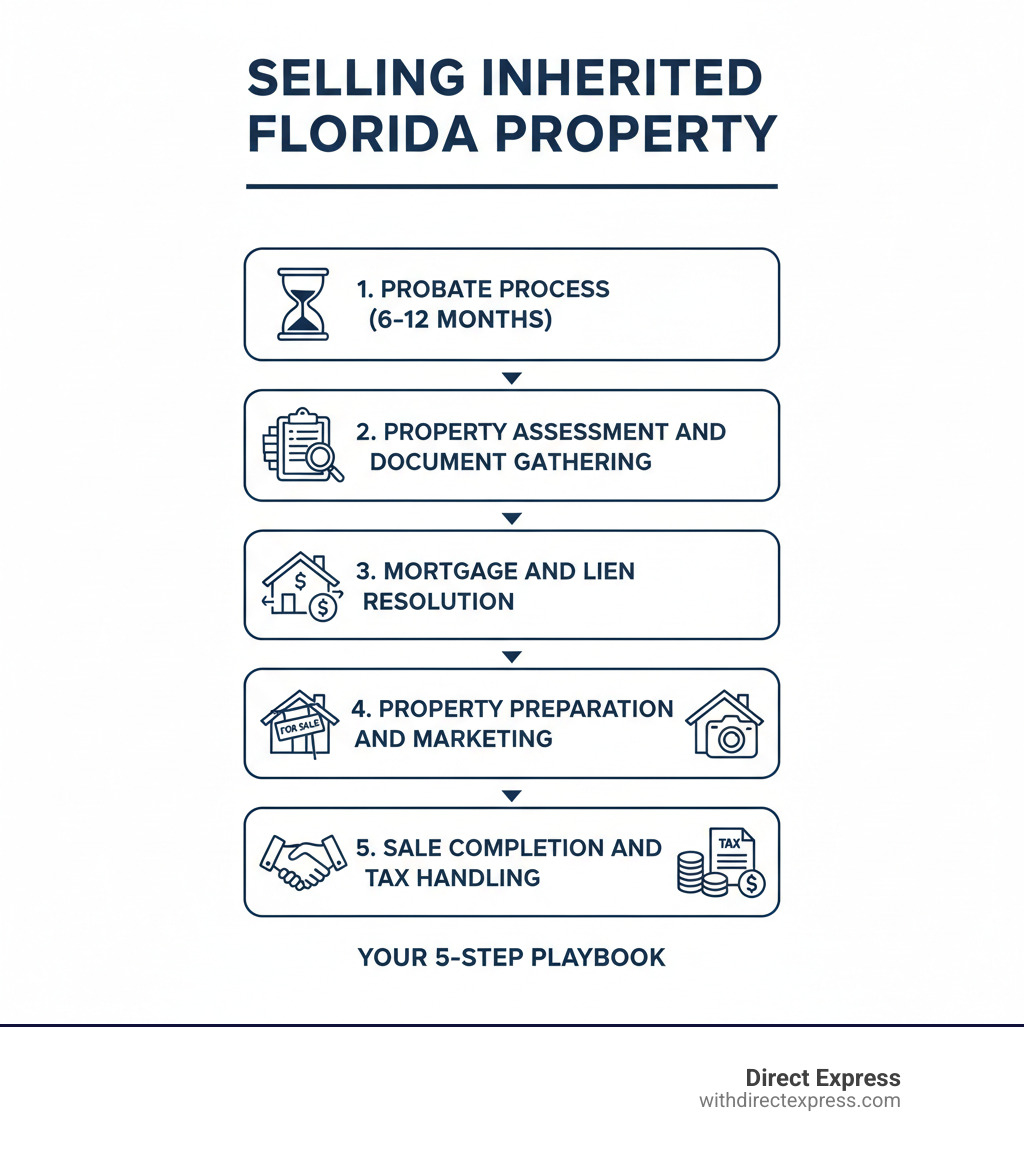
Quick Answer: How to Sell Inherited Property in Florida
- Complete probate (unless property was in a trust or had joint ownership)
- Get a “time of death” appraisal to establish your tax basis
- Gather required documents (death certificate, will, property deed, tax records)
- Choose your selling method (realtor, direct buyer, or FSBO)
- Handle taxes (no Florida inheritance tax, but federal capital gains may apply)
The process can take 6-18 months depending on probate complexity and your chosen selling method.
Inheriting a Florida home while grieving can be overwhelming. You’re suddenly responsible for property taxes, maintenance, insurance, and navigating the state’s probate laws.
The good news? Florida has some of the most favorable tax conditions for inherited property, with no inheritance tax and no estate tax, making it financially easier than many other states.
The challenge? You still need to understand probate requirements, handle potential mortgage obligations, and make smart decisions about repairs, pricing, and selling methods.
Whether you’re dealing with a waterfront condo in Miami, a family home in Tampa, or a retirement property in The Villages, the process follows similar legal steps, but the details are crucial for your financial outcome.
I’m Joseph Cavaleri, Broker and CEO of Direct Express Realty. With over 20 years in real estate, I’ve guided countless Florida families through the process to sell inherited property Florida. My experience with probate sales, property management, and Florida real estate law helps families steer this journey with confidence.
Understanding the Legal First Steps: Florida Probate and Homestead Law
When a loved one passes away leaving property in Florida, the estate typically enters probate. Probate is the court-supervised process of validating the will, paying debts, and legally transferring assets—including the house you inherited—to the rightful heirs. It ensures everything is sorted out fairly.
The court appoints a Personal Representative (or executor) to manage this process. Their duties include inventorying assets, paying bills, and distributing what remains. This person is key to the process to sell inherited property Florida.
The process begins by filing paperwork with the circuit court in the county where your loved one lived. You can learn more about the probate process in Florida through the state’s official resources. The timeline varies; simple estates may conclude in six months, while complex cases with disputes or significant debts can take a year or more.
What are the Types of Florida Probate?
Florida offers different types of probate depending on the estate’s value and how long ago the owner passed away.
Formal Administration is the most common type, used for estates valued over $75,000 (excluding the primary home) or when the death occurred less than two years ago. It’s a comprehensive process with court oversight and typically takes six to twelve months.
Summary Administration is a simplified, faster process for estates worth less than $75,000 (excluding the home), or if the owner has been deceased for more than two years. It often concludes in two to three months.
Ancillary Probate is required when a non-resident of Florida owned property in the state. Florida requires its own probate proceeding to handle the transfer of real estate located here.
How Florida’s Homestead Law Affects the Sale
Florida’s strong homestead laws can significantly impact your plans to sell inherited property Florida. Under Florida Constitution Article X, Section 4, a primary residence is designated as a homestead.
The major benefit is that homestead property is generally protected from creditors, who usually cannot force its sale to pay the deceased’s debts. However, homestead property has specific inheritance rules. If the deceased was married or had minor children, the property passes directly to them, often outside the normal will distribution. The probate court issues an Order Determining Homestead Status to officially confirm the property’s status, which is necessary to ensure a clear title for the sale.
Understanding these nuances is crucial when dealing with Real Estate Law Florida, especially for inherited properties.
Can You Sell an Inherited Property Before Probate is Complete?
This is a frequent question, and the short answer is usually no. You cannot sell a property you don’t legally own, and title doesn’t transfer to you until probate is complete.
However, Florida allows a few exceptions for selling during probate:
- Power of Sale Clause: If the will contains a “power of sale” clause, the Personal Representative may be able to sell the property without additional court approval, as outlined in Florida Probate Code 733.613.
- Court Approval: The Personal Representative can petition the court for permission to sell if it’s in the estate’s best interest, such as to prevent property value loss or cover expenses.
- Paying Estate Debts: If the estate lacks cash to pay debts, taxes, or administrative costs, the court may order the sale of property (excluding homestead property) to raise funds.
Even if an early sale is approved, the proceeds are held by the estate until probate is finalized and all obligations are settled.
Your Step-by-Step Guide to Sell Inherited Property Florida

With the legal landscape understood, let’s walk through the practical steps to sell inherited property Florida. Your first priority is to assess and secure the property. This includes changing locks, removing valuables, ensuring continuous insurance coverage, and keeping utilities active to protect the home and prepare it for showings.
1. Conduct a Property Assessment and Appraisal
You need two key evaluations early in the process:
- “Time of death” appraisal: This establishes the property’s value on the date of death. It’s crucial for tax purposes as it sets your “stepped-up basis,” potentially saving you thousands in capital gains tax.
- Professional inspection: This assesses the property’s current condition, identifying necessary repairs or structural issues. This information helps you decide whether to sell “as-is” or make improvements.
Based on these reports, you can make an informed decision about your selling strategy.
2. Gather All Necessary Documents
Organizing documents early is critical for a smooth sale. You will need:
- Death certificate: Official proof of passing.
- Will or trust documents: Proof of your right to inherit.
- Property deed: Proves ownership and provides the legal description.
- Title report: Reveals any liens or other issues with the title.
- Probate court orders: Documents like Letters of Administration that grant you legal authority to sell.
- Mortgage statements: To understand what is owed on the property.
- Property tax records and homeowners insurance policies.
- HOA documents: If applicable, for buyer review.
- Seller disclosure forms: Required by Florida law to detail known property issues.
3. Handle an Inherited House with a Mortgage
If the property has a mortgage, the Garn-St. Germain Act protects you. This federal law prevents lenders from demanding immediate repayment when a property is inherited by a relative. Your first step is to contact the lender to inform them of the situation.
Your options for the mortgage include:
- Assume the mortgage: Take over the existing loan and payments.
- Refinance: Secure a new loan, possibly with better terms. We can help you explore mortgage options.
- Pay off the mortgage: Use estate funds to clear the title, making the property more attractive to buyers.
During probate, the estate is responsible for making mortgage payments. Heirs must agree on how to cover these costs.
4. Prepare the Property for Sale
Getting the property ready for market influences its sale price and speed.
- Clear personal belongings: This can be an emotional process. Take your time to sort items to keep, donate, or discard. Consider a professional organizer or estate clear-out service for assistance.
- Deep clean and make strategic repairs: A clean home is essential. Based on your inspection report, address obvious problems. Inexpensive cosmetic fixes like fresh paint or new light fixtures can offer a high return on investment.
- Improve curb appeal: Simple landscaping and a clean exterior make a strong first impression.
- Decide whether to sell “as-is” or renovate: Selling “as-is” is faster and avoids upfront costs, attracting cash buyers and investors. Renovations may yield a higher price if you have the time and budget to manage them.
Navigating the Financials: Taxes on Inherited Property Sales

Florida is one of the most financially favorable states when you sell inherited property Florida. The state has no state inheritance tax and no state estate tax. While very large estates (over $13.99 million in 2025) may face federal estate tax, Florida keeps its hands out of your pockets, as confirmed by the Florida Department of Revenue.
However, the federal government may impose a capital gains tax if you sell for a profit. Understanding how this works can save you thousands.
Understanding Capital Gains Tax and the ‘Stepped-Up Basis’
Inherited property benefits from a crucial tax advantage: the ‘stepped-up basis’. This means your cost basis for the property is “stepped up” to its fair market value on the date of the owner’s death, not the original purchase price. This stepped-up basis is why the ‘time of death’ appraisal is so important.
For example, if a home was bought for $75,000 and is worth $400,000 at the time of death, your basis is $400,000. If you then sell for $410,000, you only owe capital gains tax on the $10,000 profit, after subtracting selling costs.
Inherited property also automatically qualifies for more favorable long-term capital gains tax rates (0%, 15%, or 20% depending on income), regardless of how long you’ve held it. The IRS explains these lower preferential rates in detail. Many heirs find they owe little to no federal capital gains tax.
Other Taxes and Costs to Consider
While Florida’s tax advantages are significant, budget for these costs:
- Documentary Stamp Tax: Florida’s transfer tax, charged at $0.70 per $100 of the sale price in most counties.
- Property Taxes: Prorated at closing between you and the buyer.
- Closing Costs: Typically 6-9% of the sale price for sellers, including title insurance, attorney fees, and recording fees.
- Realtor Commissions: Around 5% of the sale price if you use a traditional real estate agent.
- Attorney Fees: A wise investment for the complexities of an inherited property sale, potentially saving you from costly problems.
Choosing Your Selling Strategy & Handling Challenges

After navigating the legal and financial steps, you must decide how to sell inherited property Florida. Your choice will depend on your priorities, balancing speed versus maximum profit and the amount of effort you’re willing to invest.
Options to Sell Inherited Property Florida
You have several paths to consider, each with unique timelines and outcomes. Direct Express offers integrated services adaptable to your family’s needs.
- Working with a traditional real estate agent: A realtor provides market expertise, marketing, and negotiation guidance, listing on the MLS to reach many buyers. The trade-offs are a typical 5% commission and a process that can take months, plus you manage any repairs.
- Selling directly to a cash buyer like Direct Express: This option prioritizes speed and convenience. We can close in as little as two weeks with no need for repairs or staging. This is ideal for properties needing work, for heirs wanting a quick resolution, or to avoid carrying costs. Learn more at Sell Your Home.
- Selling “as-is”: This strategy, usable with agents or direct buyers, means selling the property in its current condition. It typically results in a lower price but eliminates the time, cost, and stress of renovations. This is popular with investors, especially for properties in areas like St. Petersburg.
How to Handle Disputes Among Multiple Heirs
Inheriting property with family can be complicated. Clear communication from the start is key to avoiding disputes over selling price, repair costs, and the timeline.
- Start with honest conversations: Hold regular family meetings to discuss priorities and make decisions together.
- Consider professional mediation: A neutral third party can facilitate discussions and find common ground, which is less costly and stressful than legal action.
- Explore buyout options: One heir can buy out the others’ shares based on a professional appraisal, keeping the property in the family.
- Partition action as a last resort: A court can force the sale and divide the proceeds. This is expensive and can damage relationships.
What if the Property is in Poor Condition?
Even properties in poor condition have value and viable selling options.
- Selling “as-is” through Direct Express is often the most practical solution. We buy homes in any condition, saving you the time, money, and effort of renovations.
- Full disclosure is crucial. Florida law requires disclosing known material defects. Being upfront attracts the right buyers, like investors who specialize in renovations.
- The investor market in Florida is active, with buyers looking for properties to fix and flip or rent.
- Consider holding as a rental investment. Sometimes a property that doesn’t make sense to sell might generate good rental income. Our Property Management services can help you evaluate this option and manage the property if you decide to become a landlord.
The key is choosing the path that aligns with your priorities. At Direct Express, we’ve seen it all, and we’re here to help you find the solution that works best for your unique situation.