



Why Home Repair Before Selling Can Make or Break Your Sale
Home repair before selling is one of the most critical decisions you’ll face as a homeowner. The right repairs can attract more buyers, speed up your sale, and increase your final offer—while the wrong ones can drain your budget without adding value.
Quick Answer: What Should You Fix?
- Always fix: Critical systems (HVAC, plumbing, electrical, roof, foundation), safety features (smoke detectors, carbon monoxide detectors), and major leaks or water damage
- High-ROI fixes: Fresh paint, curb appeal improvements, minor kitchen and bathroom updates, flooring repairs
- Usually skip: Full kitchen or bath remodels, swimming pools, luxury upgrades that don’t match your neighborhood, and cosmetic fixes that hide unfixable flaws
When you put your house on the market, you’re facing stiff competition. Buyers are looking for homes that require minimal work—what experts call “turn-key” properties. But not every repair is worth making. Some improvements will return 150% or more of what you invest, while others might only recoup 30% to 40%. The key is knowing which repairs matter most to buyers in your market, and which ones are just burning money.
As Joseph Cavaleri, Broker and CEO of Direct Express Realty with over two decades of experience in Florida real estate, I’ve guided countless sellers through the home repair before selling process, helping them maximize their profits while avoiding costly mistakes. Throughout this guide, I’ll show you exactly which repairs to prioritize, which to skip, and how to make smart decisions that get your home sold faster and for more money.
The Strategic Decision: To Fix or Not to Fix Before Selling?
Deciding whether to undertake home repair before selling is a pivotal moment for any homeowner. On one hand, a well-maintained home can be a magnet for buyers, potentially leading to a quicker sale and a higher asking price. On the other, investing in repairs that don’t offer a good return on investment (ROI) can eat into your profits. It’s a balancing act, and understanding the benefits and pitfalls is crucial.
The benefits of strategic repairs are clear. Firstly, fixing your home can attract a larger pool of buyers. Many buyers, especially first-timers, are looking for homes that require minimal work, allowing them to move in and settle without immediate renovation stress. A home that appears well-cared for suggests fewer hidden problems, building buyer confidence.
Secondly, repairs can significantly increase your home’s value. While a fresh coat of paint might seem minor, it can dramatically change a buyer’s perception and their willingness to offer more. Homes in good condition are more likely to attract competitive offers, pushing up the final sale price.
Thirdly, addressing issues proactively can speed up the sale process. Homes needing repairs often sit on the market longer, gathering dust and potentially facing price reductions. By tackling problems upfront, you present a move-in ready property that can generate immediate interest.
Finally, making repairs before listing can help you avoid stressful negotiations. Buyers often request price reductions or credits for repairs identified during inspections. If you’ve already addressed these issues, you eliminate a major point of contention, leading to a smoother, faster closing.
However, there are times when undertaking extensive home repair before selling might not be worth it. In a hot seller’s market, buyers might overlook minor cosmetic issues or even some larger deferred maintenance simply to secure a home. In such an environment, the demand is so high that sellers might get away with fewer repairs. If you’re on a tight budget, or if the cost of a repair far outweighs the potential increase in sale price, it might be better to skip it. Some low-ROI projects, like certain major renovations, simply don’t make financial sense when you’re preparing to sell.
The Impact of Market Conditions
The decision to repair is heavily dependent on the current real estate market. In a buyer’s market, where there are more homes for sale than eager purchasers, you’ll likely need to pull out all the stops to make your home stand out. Buyers have the luxury of choice and will gravitate towards properties that are move-in ready and well-maintained. This means addressing more issues, from cosmetic updates to major system repairs, to appeal to discerning buyers and secure a competitive offer.
Conversely, in a hot seller’s market, like what we’ve often seen in parts of Florida, you might have more leeway. If buyers are scrambling for limited inventory, they might be willing to overlook minor cosmetic flaws or even some deferred maintenance. In such a market, you might be able to polish what you have and sell with little extra sweat. The key is to understand your local market conditions in St. Petersburg, Tampa Bay, or wherever your property is located, and adjust your strategy accordingly. A local real estate agent can provide invaluable insights into current buyer expectations and demand.
When Selling ‘As-Is’ is the Smarter Move
While making repairs often yields benefits, there are specific scenarios where selling your home “as-is” is the smarter, more practical choice. Selling “as-is” means you’re offering the property in its current condition, and the buyer accepts it with all existing defects, visible or not. This approach can be appealing for several reasons.
Firstly, it offers unparalleled speed and convenience for sellers. If you’re facing a tight timeline, perhaps due to a job relocation or personal circumstances, selling “as-is” eliminates the time-consuming process of coordinating contractors, overseeing repairs, and potentially dealing with unexpected delays. This can be particularly beneficial for homeowners looking to sell house quickly.
Secondly, it can be a financial relief. If your home requires extensive, costly repairs, such as major foundation work or a new roof, the investment might be too substantial, or the ROI too low, to justify the expense. In such cases, selling “as-is” allows you to avoid pouring more money into a property you’re leaving, while still attracting buyers who are looking for a deal and are willing to undertake renovations themselves. These buyers often include investors or those seeking a fixer-upper project.
However, it’s important to understand that selling “as-is” typically means a lower asking price. Buyers will factor in the cost and effort of repairs when making their offer. If you’re considering this route, we at Direct Express can help you weigh the pros and cons, assess your property’s current value, and connect you with cash home buyers who specialize in “as-is” transactions, offering a competitive offer without the hassle of repairs. For more information on selling your home quickly, especially in areas like Tampa, you can explore our guide on sell my house fast tampa ultimate guide.
The Seller’s Roadmap: How to Decide Which Repairs Are Most Important
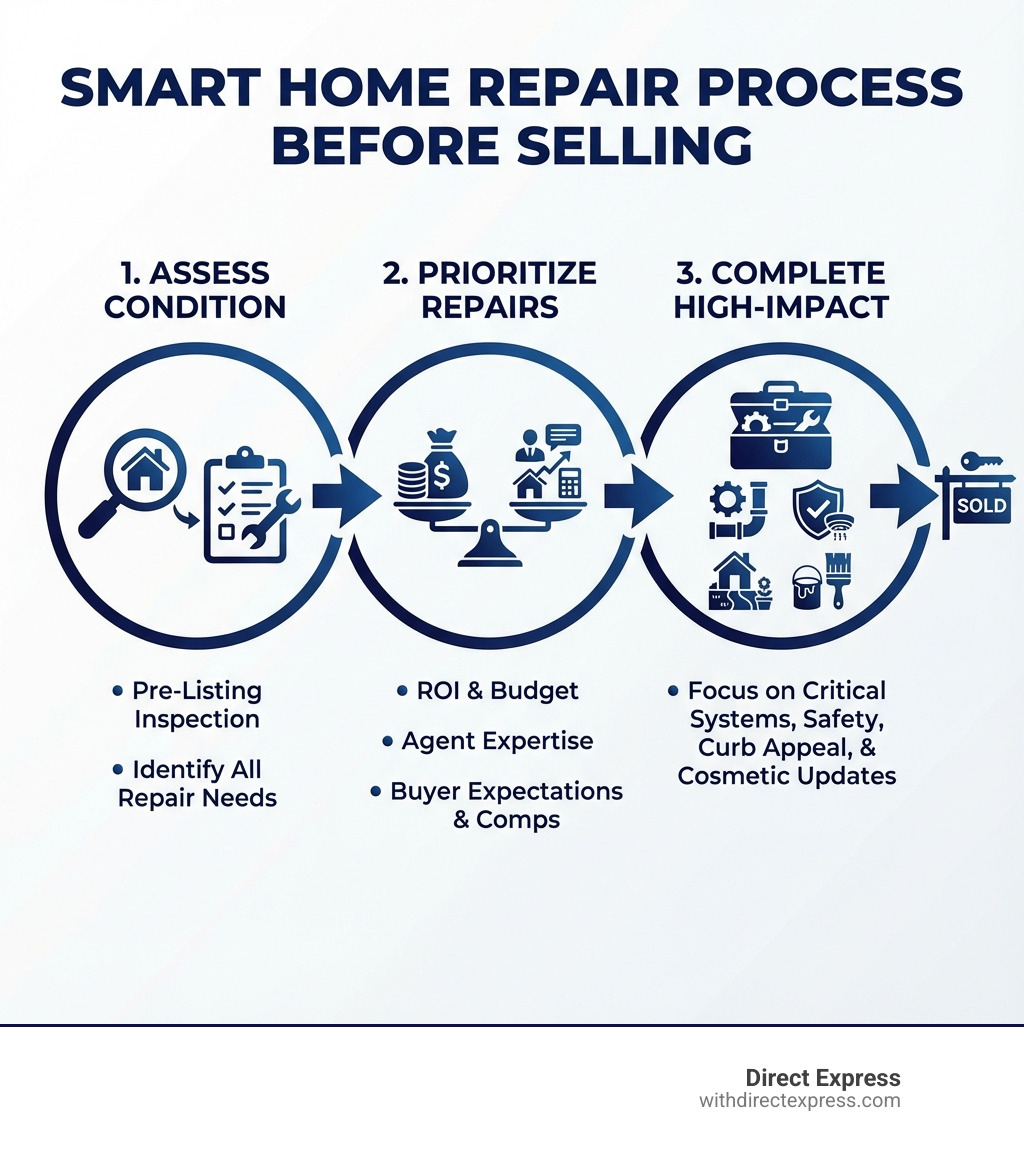
Navigating home repair before selling can feel like charting a course without a compass. With so many potential projects, how do you decide where to focus your efforts and, more importantly, your budget? The key lies in a strategic roadmap: assess, prioritize, and budget. Our goal is to help you make informed decisions that maximize your home’s appeal and value without overspending.

Step 1: Get a Pre-Listing Inspection
One of the most powerful tools in your selling arsenal is a pre-listing inspection. Think of it as a proactive health check for your home. By scheduling a pre-listing inspection before you even put your house on the market, you gain invaluable insight into its true condition.
This proactive approach helps identify major problems that could deter buyers or lead to costly negotiations later. For instance, an aging water heater with leaks or sediment buildup could lead to costly repairs for a new buyer, but knowing about it beforehand allows you to address it on your terms. Similarly, foundation issues, like cracks larger than 1/4-inch, can greatly deter buyers and may lead to costly repairs, making early detection critical.
A pre-listing inspection reveals potential red flags that a buyer’s inspector would likely uncover. This gives you time to either fix the issues, get contractor bids for repairs, or adjust your asking price accordingly. This transparency can prevent surprises, empower you with negotiation leverage, and ultimately lead to a smoother, faster sale. It also demonstrates to potential buyers that you’re an honest and responsible seller, building trust from the outset.
Step 2: Consult a Real Estate Agent
Before you lift a single hammer, your first call should be to a trusted real estate agent. Their expertise is indispensable in guiding your home repair before selling decisions. A local agent, especially one with deep roots in Florida markets like St. Petersburg or Largo, understands buyer preferences and market trends unique to your area.
An experienced real estate agent can walk through your home with a critical eye, identifying repairs that offer the best return on investment (ROI) and advising you on where money can be saved by leaving projects undone. They can run comparable home sales (comps) to see what similar homes in your neighborhood are selling for and what features are most valued by buyers. This data-driven approach helps you calculate the potential ROI for specific repairs, ensuring you don’t overspend on upgrades that won’t help your home sell for more.
For example, our agents at Direct Express can advise whether to replace that outdated kitchen countertop or simply update the hardware, based on what buyers in your specific Tampa Bay neighborhood are looking for. They can also provide you with a home-selling-checklist to ensure you cover all your bases, from repairs to paperwork.
Step 3: Budgeting for Home Repair Before Selling
Once you have insights from your pre-listing inspection and real estate agent, it’s time to set a realistic budget for your home repair before selling. This involves a careful cost-versus-value analysis. You want to invest enough to make your home appealing but not so much that you diminish your profit margin.
A common rule of thumb is to not spend more than 10% of your home’s value on a kitchen remodel, and no more than 5% on a primary bathroom remodel, as these major renovations often don’t see a 100% return. For example, a complete kitchen overhaul might only yield around a 60% return on investment. Our agents can help you understand these figures in the context of your specific home and market.
Balancing repair costs with the potential increase in sale price is crucial. Focus on repairs that address structural integrity, safety, and major deferred maintenance, as these are non-negotiable for most buyers and can significantly impact appraisal. Then, consider cosmetic updates that offer high impact for minimal cost. The goal is to improve your home’s appeal and value, not to create a showroom that overshoots buyer expectations for your price point and neighborhood.
Maximizing Value: A Guide to Home Repair Before Selling
Now that we understand the strategic framework for home repair before selling, let’s dive into the specific areas where your investment can yield the greatest returns. From the unseen critical systems to the visible curb appeal, every decision can impact your final sale price.
| Project Type | Average Cost (National) | Estimated ROI (2024) |
|---|---|---|
| Garage Door Replacement | $4,365 | 194% |
| Steel Entry Door Replacement | $2,216 | 188% |
| Manufactured Stone Veneer | $11,102 | 153% |
The Critical Systems Buyers Scrutinize
These are the big-ticket items that buyers and inspectors will scrutinize most closely. Ignoring them can be a deal-breaker.
- HVAC (Heating, Ventilation, and Air Conditioning): In Florida, a reliable AC system is non-negotiable. Air conditioners last an average of 10 to 15 years, heat pumps 16 years, and furnaces between 15 to 20 years. If your system is old or showing signs of wear (uneven temperatures, loud noises), consider having it serviced or replaced. Installing a new HVAC unit can range between $7,000 to $16,000, but a non-functional system can prevent a home from being financed.
- Plumbing: Water damage caused by plumbing problems is serious, leading to mold and dry rot. Easy-to-fix issues include replacing a leaky faucet’s washer or repairing a running toilet. Major issues like damaged pipes or hidden leaks can be costly to repair, depending on the source and extent of damage.
- Electrical: Electrical problems are no laughing matter—they’re responsible for 51,000 fires every year. Ensure your electrical panel is up to code, GFCI outlets and receptacles are present in wet areas (kitchens, bathrooms, outdoors), and there are no frayed wires or faulty switches. Older fuse box systems should be checked by an electrician.
- Roof: An aging roof can decrease your property value and cause leaks, mold, and high energy bills. Roofing lasts about 20 years depending on the material. Repair costs for a damaged roof can range from $150 to $8,000, depending on the damage and materials used. A roof replacement can cost an average of $5,855 to $13,113.
- Foundation: A severely damaged foundation threatens the structural integrity of your entire home. Foundation problems, like cracks larger than 1/4-inch, can greatly deter buyers. Major foundation repairs can cost $2,188 to $7,884, with even basic fixes like filling a single crack running between $800 and $1,500. While hairline fissures (1/16″) are common in the first few years, horizontal or 45-degree angled cracks signal serious issues.
- Health and Safety: Every state requires in-home smoke detectors, and carbon monoxide detectors are required in all but two states (Kansas and Hawaii). Smoke detectors last on average seven years, and carbon monoxide detectors can last up to ten years. Ensure all detectors are up-to-date and functional.
High-Impact, Low-Cost Interior Updates
These are the cosmetic changes that offer significant visual appeal without draining your bank account.
- Fresh Neutral Paint: Nothing refreshes a room like a fresh coat of paint. Massachusetts-based real estate agent Bill Gassett recommends repainting walls, especially if there’s discoloration or repaired water damage. Opt for light, neutral shades over bold, bright colors to appeal to a wider audience. This allows buyers to envision their own style in the space.
- Flooring Fixes: Most buyers are understanding of wear from general use, but obvious defects and damage are red flags. Real Simple recommends adding a layer of finish to hardwood floors every 3-5 years; refinishing can make them look new again. For carpets, Angies List suggests cleaning every 12-18 months, or more frequently if you have pets or kids. If carpets are heavily stained or worn, replacement might be necessary. Natural wood flooring lasts about 100 years, vinyl floors about 50, and carpet between 8 and 10 years, so consider their lifespan.
- Updating Light Fixtures and Hardware: Brighten dark areas with stylish light fixtures or lamps. Replacing outdated hardware on cabinets and doors can instantly modernize a room. These small changes can transform a gloomy, cramped space into a bright, welcoming one. For instance, in a recent project, a couple spent $100 on new kitchen hardware and $52 on chic pendant lights, significantly improving the kitchen’s appeal.
Boost Curb Appeal Without Breaking the Bank
First impressions are everything, and your home’s exterior is the first thing potential buyers see. Improving your home’s curb appeal doesn’t have to break the bank, especially in the lush Florida landscape.
- Landscaping: Simple landscaping upgrades, such as adding colorful flowers or spreading fresh mulch, can yield high returns. Trim overgrown vegetation, prune trees, and ensure your lawn is neatly mowed. A homeowner recently rented a pressure washer for $87 to deep-clean their driveway and exterior walls, then hired a landscaping crew for $500 to tidy up the yard—a small investment for a big visual impact. For more specific advice on maintaining your Florida property, check out our guide on florida-home-improvements.
- Painting the Front Door: A fresh coat of paint on your front door can dramatically improve curb appeal. Choose a cheerful color that complements your home’s exterior.
- Power Washing: Renting a pressure washer can make your home’s exterior, driveway, and walkways look brand new, removing years of grime and mildew common in our humid Florida climate.
- Garage Door Replacement: According to Zonda’s 2024 Cost vs. Value Report, garage door replacement offers an astonishing 194% ROI, making it one of the most effective exterior projects. A new garage door instantly updates your home’s facade.
Repairs to Reconsider: What Not to Fix When Selling Your House
While some home repair before selling projects are essential, others can be money pits. The goal is to aim for something between “as-is” and “turnkey”—doing just enough to attract buyers without pouring unnecessary cash into repairs that won’t help your home sell for more.
Why a Full Kitchen or Bath Remodel Might Be a Mistake
It’s tempting to dream of a brand-new kitchen or a spa-like bathroom, but when selling, a full remodel might be a financial misstep. Most homeowners don’t see more than a 60% return on a complete kitchen overhaul. Buyers often have specific tastes and might prefer to customize these spaces themselves, meaning your expensive renovation could be ripped out and replaced.
Instead of a full gut, focus on minor, cosmetic updates that offer a better ROI:
- Kitchens: Paint existing cabinets (a couple spent $1200 to paint theirs a crisp white), replace outdated hardware ($100), update light fixtures ($52 for pendant lights), and consider new countertops if yours are severely damaged (though new countertops can cost $1,840 to $4,387). Ensure appliances are clean and functional; replacing an old, noisy refrigerator or ancient dishwasher can make a big difference.
- Bathrooms: Replace chipped shower or tub tiles, deep clean grout, replace old caulk, fix leaky faucets or running toilets, and update light fixtures (a couple spent $300 on contemporary sconces). A modern mirror can also make a big impact for around $115. These smaller updates can make the space feel fresh and clean without the massive investment of a full remodel. You can learn more about How Much Will a Bathroom or Kitchen Renovation Cost You?
Don’t Hide Unfixable Flaws
Some property flaws simply cannot be overcome by cosmetic upgrades. If your home backs onto a busy highway, no amount of new kitchen cabinets or fresh paint will change that fundamental drawback. Similarly, an awkward layout or a property with significant, unfixable structural issues will require a realistic pricing strategy.
Don’t invest heavily in “vanity fixes” trying to compensate for these unfixable flaws. Buyers will still factor in the major detractions, and you risk overspending on improvements that won’t significantly increase the sale price. Be honest with yourself and your agent about your home’s limitations, and price it accordingly. Sometimes, it’s better to offer a home “as-is” at a fair price than to pour money into improvements that won’t yield a return.
Frequently Asked Questions about Home Repairs Before Selling
What are the biggest risks of not fixing my house before listing?
Ignoring necessary home repair before selling can lead to several significant risks:
- Inspection issues derailing a sale: Maintenance and repair issues are one of the primary reasons why pending home sales fall through. A buyer’s inspection report highlighting numerous problems can cause them to walk away or demand substantial concessions.
- Receiving significantly lower offers: If you sell “as-is” with known issues, buyers will factor in the cost of repairs and offer less. Unresolved repair issues can result in much lower offers from prospective buyers.
- Longer time on the market: Homes needing repairs tend to sit on the market longer, especially in competitive conditions. This can lead to increased carrying costs and a perception that something is wrong with the property.
- Negative buyer perception: A home with obvious deferred maintenance suggests neglect, making buyers wonder what other hidden problems might exist. This creates a negative first impression that’s hard to overcome.
What are some low-cost repairs that make a big impact?
Many low-cost home repair before selling options can significantly boost your home’s appeal:
- Fresh Paint: Repainting walls in neutral colors is one of the cheapest and easiest ways to refresh a room.
- New Cabinet Hardware: Replacing outdated knobs and pulls instantly modernizes kitchens and bathrooms.
- Updated Light Fixtures: Brighten dark areas and update the look of any room.
- Deep Cleaning: A spotless home, including clean carpets and sparkling bathrooms, signals a well-maintained property. Don’t forget to clean forgotten areas like baseboards and ceiling fans.
- Minor Landscaping: Simple upgrades like fresh mulch, colorful flowers, and trimming overgrown bushes add significant curb appeal.
- Re-caulking Bathrooms: Replacing discolored or cracked caulk around tubs and sinks makes bathrooms look cleaner and prevents moisture issues.
- Fixing Leaks: A leaky faucet or running toilet is an easy fix that prevents concerns about water damage.
Are there any repairs that are generally not worth the investment?
Yes, some repairs or upgrades typically offer a low return on investment when selling:
- Installing a Swimming Pool: While a pool can be enjoyable in Florida, its ROI is often low, and it can even deter some buyers who don’t want the maintenance.
- High-End or Luxury Upgrades: If your upgrades are significantly more luxurious than comparable homes in your neighborhood, you likely won’t recoup the cost. Buyers in a specific price range aren’t usually willing to pay extra for features that exceed local norms.
- Converting a Bedroom to a Specialized Room: Converting a bedroom into a home gym, elaborate office, or walk-in closet can reduce the perceived number of bedrooms, which often equals value. List the largest number of bedrooms you can and let buyers imagine what they can do with the extra room.
- Major Renovations: As discussed, full kitchen or bathroom remodels often don’t provide a high ROI because buyers may prefer to customize these spaces to their own taste.
Conclusion: Sell Your Home with Confidence
Deciding on home repair before selling is a strategic process, not a checklist to blindly follow. The goal is to make smart, informed decisions that maximize your home’s marketability and value without unnecessary expenses. By focusing on critical systems, high-impact cosmetic updates, and addressing issues proactively, you can present a home that appeals to a wider range of buyers, sells faster, and potentially for a higher price.
The value of professional guidance cannot be overstated. From conducting a pre-listing inspection to consulting with a local real estate agent, leveraging expertise helps you steer the complexities of the market. Our team at Direct Express understands the unique dynamics of Florida’s real estate market, from St. Petersburg to Wesley Chapel. We offer an integrated approach, streamlining the entire property transaction process. Whether you need advice on which repairs to prioritize, assistance with coordinating contractors, or a comprehensive plan to list your home, we’re here to help.
Don’t let the decision of home repair before selling overwhelm you. Partner with us to make confident choices that lead to a successful sale. Get expert guidance on selling your home with Direct Express today.