


Why Tampa Homeowners Need to Act Fast Against Foreclosure
To avoid foreclosure Tampa homeowners have multiple options to protect their homes and financial futures. The key is acting quickly. Here are your immediate action items:
Quick Solutions to Avoid Foreclosure:
- Contact your lender immediately – They prefer working with you over foreclosure.
- Apply for loan modification – Lower payments, reduced interest, or extended terms.
- Request forbearance – A temporary pause on payments for hardships.
- Explore Tampa’s assistance program – Up to $15,000 for qualifying households.
- Consider a short sale – Sell for less than owed with lender approval.
- File Chapter 13 bankruptcy – Stop foreclosure and create a repayment plan.
Foreclosure is incredibly stressful, but the good news is that most foreclosures are preventable. In Florida’s judicial system, the stakes are high: you have only 20 days to respond once served with foreclosure papers. Missing this deadline costs you valuable legal defenses.
Tampa offers specific resources, including the City’s Foreclosure Prevention Assistance Program, to help at-risk households. Understanding all your options—from working with your lender to exploring alternatives like short sales—is critical.
I’m Joseph Cavaleri, a licensed real estate broker and CEO with over two decades of experience helping Tampa Bay families steer complex property challenges. My background as a former loan officer provides unique insight into the foreclosure process, allowing me to guide homeowners toward the best possible outcomes.
Understanding the Foreclosure Process in Florida
Florida is a judicial foreclosure state, meaning your lender must go through the courts to take your home. This process gives you multiple opportunities to respond and protect your rights.
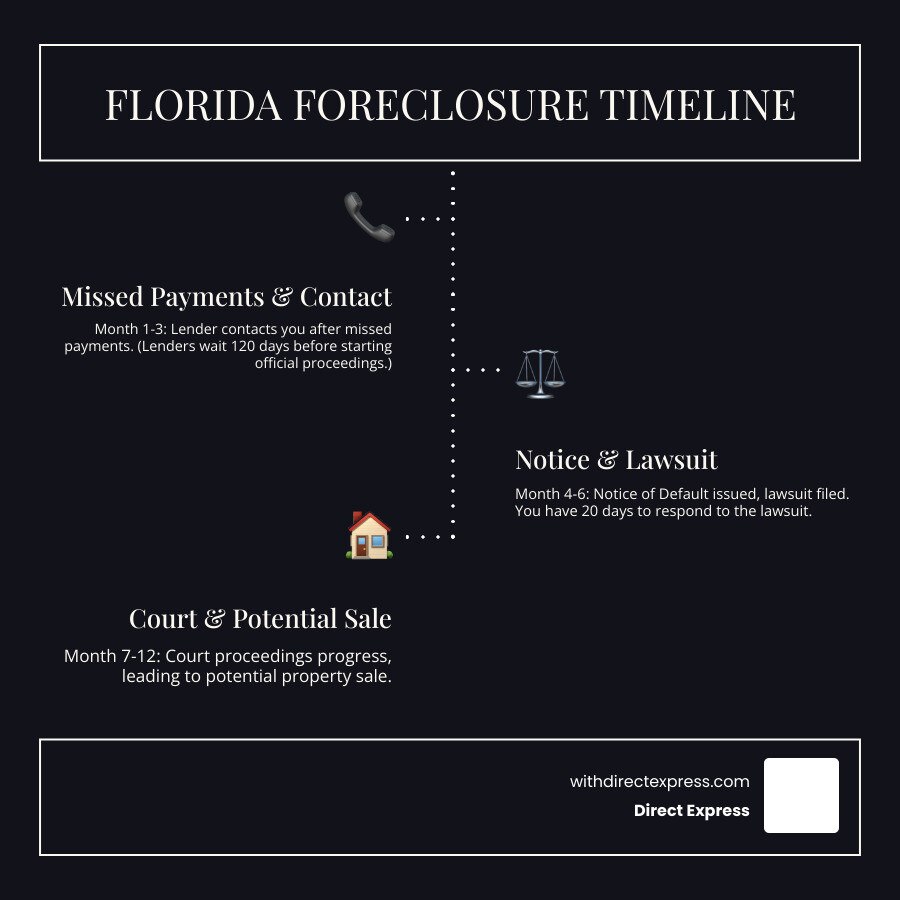
Typically, the process begins after several missed mortgage payments. Lenders must wait 120 days of non-payment before officially starting foreclosure. During this time, you’ll receive notices from your lender. Once the waiting period ends, they will issue a Notice of Default, an official warning that you’ve breached your mortgage agreement.
Next, the lender files a foreclosure lawsuit, and you will be served with legal documents. You have only 20 days to file a written response with the court. This 20-day window is critical; ignoring these papers is a common mistake that strips homeowners of their legal options.
It’s also important to know that Florida is a “recourse state.” If your home sells for less than you owe, the lender can seek a deficiency judgment against you for the difference, potentially garnishing wages or seizing other assets. A foreclosure also stays on your credit report for seven years, making it difficult to secure future loans or even rent an apartment.
Never ignore mail from your lender. Every communication contains vital information about deadlines and potential solutions. For more details, refer to HUD’s guide on avoiding foreclosure.
Primary Reasons for Foreclosure in Tampa
Most people facing foreclosure are dealing with circumstances beyond their control. Common reasons in Tampa include:
- Job loss or reduced income: A sudden layoff or reduced hours can make mortgage payments impossible.
- Medical emergencies: Unexpected medical bills combined with time away from work can quickly drain savings.
- Divorce or separation: A household that relied on two incomes may struggle to support two separate living situations and a mortgage.
- Adjustable-rate mortgage (ARM) resets: When the initial low rate on an ARM adjusts upward, the new, higher payment can be unaffordable.
- Unexpected home repairs: In Florida, major expenses like hurricane damage or a new HVAC system can force a choice between repairs and the mortgage.
- Rising cost of living: Even without a specific crisis, the increasing cost of groceries, insurance, and utilities can erode a budget until there’s nothing left for the mortgage.
The Critical First Steps to Take
When you realize you might miss a payment, taking immediate action gives you the best chance to avoid foreclosure Tampa families face. It’s scary, but these first steps are essential.
- Acknowledge the situation: Gather all your financial documents—pay stubs, bank statements, bills, and mortgage paperwork—to get a clear picture of your finances.
- Create a household budget: Understand where your money is going to identify potential savings.
- Prioritize housing expenses: Your home is your family’s foundation. Cut non-essential spending to free up cash for your mortgage.
- Sell non-essential items: A second car, unused electronics, or jewelry could provide enough cash to catch up on a missed payment.
- Open all mail from your lender: These envelopes contain crucial information about assistance programs and deadlines. Don’t miss your chance to save your home.
For more guidance on managing your finances, visit our mortgage information page.
Proactive Steps to Avoid Foreclosure Tampa

Once you understand your financial situation, it’s time to be proactive. Instead of waiting for the next notice, engage directly with the people and programs designed to help you avoid foreclosure in Tampa.
Contacting Your Lender: Your First Line of Defense
Your lender wants to help you avoid foreclosure, as it’s an expensive process for them too. The moment you anticipate trouble with your mortgage, call your lender and ask for the loss mitigation department. These specialists are trained to work with homeowners facing financial hardship.
Be honest about your situation. Whether it’s a job loss, medical issue, or divorce, explain what happened. Have your financial documents ready. The more prepared and upfront you are, the more options they can offer. Many homeowners are surprised by their lender’s willingness to help once they make that first call. For more information on navigating this process, check out our pre-approval mortgage information.
Understanding Loan Modifications, Forbearance, and Repayment Plans
Your lender’s loss mitigation team will likely discuss three main options: loan modifications, forbearance, and repayment plans. Each serves a different purpose.
| Feature | Loan Modification | Forbearance | Repayment Plan |
|---|---|---|---|
| What it is | Permanent change to your loan terms. | Temporary pause or reduction in payments. | Structured plan to catch up on missed payments. |
| How it helps | Lowers monthly payment, reduces interest, extends term. | Provides temporary relief during hardship. | Allows you to pay back arrears over time. |
| Best for | Long-term financial difficulty, needing lower payment. | Temporary hardship (e.g., job loss, illness). | Short-term financial setback, can afford higher payments soon. |
| Catch-up method | Missed payments often added to loan balance. | Lump sum, repayment plan, or modification afterward. | Regular payments plus extra amount each month. |
| Impact on loan | New, revised loan terms. | Original loan terms resume after forbearance. | Original loan terms resume after arrears are paid. |
A loan modification permanently changes your mortgage to make it more affordable, often by lowering your interest rate or extending the loan term. It’s best for long-term financial challenges.
Forbearance provides temporary relief by pausing or reducing your payments for a few months. It’s not forgiveness; you’ll need to repay the missed amount later, often through a repayment plan or modification. Learn more by reading What is Mortgage Forbearance?.
A repayment plan is for short-term setbacks. It lets you catch up on missed payments by adding an extra amount to your regular payment for several months.
Your lender can help determine the best option for you. For more comprehensive mortgage information, visit our mortgage information page.
Local Tampa Resources to Help Avoid Foreclosure
Tampa homeowners can access excellent local resources for financial assistance and expert guidance.
The City of Tampa’s Foreclosure Prevention Assistance Program offers qualifying households up to $15,000 to cure a mortgage delinquency. To qualify, your home must be your primary residence within city limits, your property taxes must be current, and your household income must be at or below 80% of the Area Median Income. The aid is a 0% interest, deferred payment loan that often doesn’t need to be repaid if you meet the terms.
Additionally, HUD-approved housing counseling agencies offer free, unbiased advice. They can help you create a budget, understand your options, and connect you with assistance programs.
Nationally, the Homeowner Assistance Fund has provided billions in aid for mortgage payments, insurance, and utilities. You can find more information at Homeowner Assistance Fund info. Don’t go through this alone—take advantage of the help available.
Alternative Solutions When Keeping Your Home Isn’t Feasible

Sometimes, keeping your home isn’t financially sustainable. In these cases, the goal shifts from saving the house to protecting your financial future. These alternatives can help you avoid foreclosure Tampa consequences and give you a fresh start.
How a Short Sale Can Help You Avoid Foreclosure in Tampa
A short sale is when your lender agrees to let you sell your home for less than the total mortgage balance. It’s a negotiated exit that benefits both parties: the lender avoids a costly foreclosure, and you avoid a foreclosure on your credit report.
The process requires lender approval and proof of financial hardship. You’ll need to actively market your home to show you’re seeking a fair market price. While a short sale still impacts your credit, it’s generally less damaging than a foreclosure. A key goal is to negotiate a deficiency waiver, which prevents the lender from pursuing you for the remaining debt.
Working with experienced professionals is crucial. Our Tampa Bay Realtors understand the complexities of short sales and can guide you through the negotiations and paperwork.
Deed in Lieu of Foreclosure: A Mutual Agreement
A deed in lieu of foreclosure is a simpler solution where you voluntarily transfer the property title back to the lender in exchange for being released from your mortgage debt. This avoids a public court process and provides a definitive end to your mortgage obligation.
Your lender saves on legal fees, and you avoid the severe credit damage of a completed foreclosure. However, be aware of potential tax implications, as the IRS may consider the forgiven debt as taxable income. It’s vital to consult a tax professional. Our expertise in real estate law in Florida can help you understand these issues.
Selling Your Home to a Cash Buyer
When foreclosure deadlines are close, selling to a cash buyer offers speed and certainty. Cash buyers can often close in as little as two weeks, with no delays for mortgage approvals or appraisals.
You can sell your home “as-is” without making any repairs, and you typically avoid paying realtor commissions. While the offer may be less than the full retail market value, the certainty of a quick, guaranteed sale often outweighs the price difference when foreclosure is imminent. You trade some potential profit for peace of mind and a clean break.
This option is popular with property investors. If you’re considering this route, you can learn more about cash home buyers in St. Petersburg to see how the process works.
Legal and Financial Safeguards

When facing foreclosure, you have more legal protections than you might think. Understanding these safeguards gives you the power to make informed decisions and avoid foreclosure Tampa situations from derailing your life.
The Role of Bankruptcy in Stopping Foreclosure
Bankruptcy is a powerful legal tool designed to give people a fresh start. When you file, the court issues an automatic stay, which immediately halts all collection activities, including foreclosure proceedings. This provides immediate relief and time to regroup.
- Chapter 13 bankruptcy is often used by homeowners who want to keep their homes. It allows you to create a court-approved repayment plan over three to five years to catch up on missed mortgage payments while continuing your regular payments.
- Chapter 7 bankruptcy wipes out unsecured debts like credit cards and medical bills. While it doesn’t directly solve the mortgage issue, it can free up enough money in your budget to resume payments. It can also eliminate any potential deficiency judgment.
Bankruptcy doesn’t erase your mortgage, but it provides a strategic pause. If you’re considering homeownership again after financial hardship, our buying a home page can help you understand your future options.
How a Real Estate Attorney Can Help
Your mortgage company has a team of lawyers; you deserve expert representation too. A real estate attorney can be your strongest advocate. They will:
- Review lender paperwork for errors or legal vulnerabilities.
- Negotiate with banks for loan modifications, repayment plans, or deficiency waivers.
- Represent you in court, ensuring you meet the critical 20-day response deadline and asserting all applicable defenses.
- Explain your legal rights in plain English.
- Work to prevent deficiency judgments, which is crucial in a recourse state like Florida.
Our team understands the intricacies of Florida real estate law and can provide the robust legal defense you need.
Common Foreclosure Scams to Watch Out For
Scammers target homeowners in distress. Be wary of these common red flags:
- Phantom help: Someone takes your money with a promise to negotiate with your lender, then disappears.
- Large upfront fees: Legitimate, HUD-approved housing counselors offer free services. Be suspicious of anyone demanding large payments before providing results.
- Pressure to sign over your deed: Scammers may trick you into transferring ownership of your home, promising you can rent it back. In reality, they take your equity and evict you.
- “Forensic audit” guarantees: These services charge thousands for reports that promise to find errors to get you a free home, but they rarely have legal value.
The best protection is to work with trusted, licensed professionals like HUD-approved counselors, real estate attorneys, and established real estate companies. Never sign anything you don’t understand.
Conclusion
Facing foreclosure in Tampa can feel overwhelming, but you are not powerless. As we’ve covered, there are real, actionable solutions that can help you avoid foreclosure Tampa and protect your family’s future.
The single most important step is to take action immediately. Procrastination is the biggest threat to saving your home. Start by calling your lender’s loss mitigation department—they want to work with you.
Explore all your options, from loan modifications and local assistance programs like Tampa’s Foreclosure Prevention Assistance Program to strategic alternatives like a short sale if keeping the home isn’t feasible. When legal issues arise, a qualified real estate attorney is your best defense.
At Direct Express, we understand that real estate challenges are complex. Our unique model provides comprehensive support, addressing mortgage, legal, and sales strategies under one roof. Your situation is unique, and your solution should be too.
We’ve helped countless Tampa Bay families steer these exact challenges. The path to financial stability starts with the decision to act. You have options and support available.